Xinhua
07 Jun 2026, 14:15 GMT+10
For years, accession to the EU was primarily presented as a technical process centered on reforms, governance standards and alignment with EU legislation. Today, the renewed push is increasingly becoming a question of political alignment rather than administrative readiness.
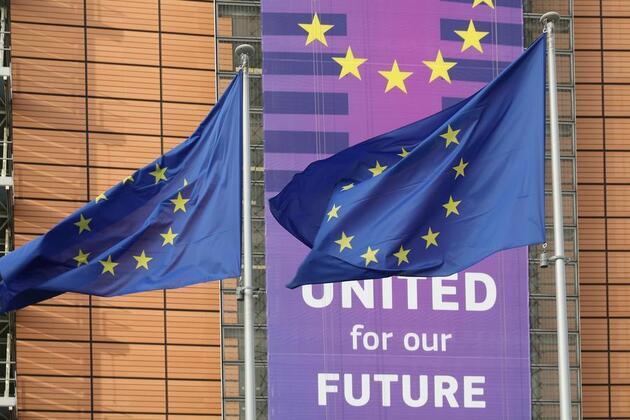
BRUSSELS, June 7 (Xinhua) -- At the EU-Western Balkans Summit held in Montenegro on Friday, the European Union (EU) renewed efforts to accelerate the accession of Western Balkan countries, highlighting a growing recognition in Brussels that enlargement is increasingly tied to security considerations amid a changing geopolitical landscape.
The summit came as EU leaders seek to inject fresh momentum into a process long criticized for moving too slowly. Leaders discussed ways to speed up the Western Balkans' integration, but whether enlargement will ease the EU's security anxiety at a time of mounting uncertainty across the continent remains an open question.
SECURITY IMPERATIVE
For years, EU enlargement was largely viewed as an economic and political project aimed at promoting prosperity, democratic reforms and regional reconciliation. Now, the context has changed dramatically.
"In these times of global geopolitical uncertainty and economic instability -- now more than ever -- enlargement is not just an opportunity. It is a geostrategic necessity for Europe," European Council President Antonio Costa said in Serbia ahead of the summit, describing the accession process as one of the EU's most strategic investments.
The Russia-Ukraine conflict, now in its fifth year, has fundamentally reshaped European security thinking. Beyond the battlefield, drone incidents, cyberattacks and heightened military activity around the Black Sea and NATO's eastern flank have reinforced concerns that instability can quickly spill across borders.
Several Western Balkan countries have spent more than a decade waiting for membership negotiations to advance. Frustration over delays has periodically prompted the EU to worry that prolonged uncertainty could undermine reforms and fuel political instability.
At the same time, debates over burden-sharing within NATO and Washington's evolving strategic priorities have intensified European unease about the long-term reliability of external security guarantees.
Against this backdrop, many analysts argue that, for Brussels, bringing the Western Balkans closer to the EU is seen as a way to strengthen stability along the bloc's southeastern flank and reduce potential vulnerabilities in an uncertain security environment.
POLITICAL CHOICE
For years, accession to the EU was primarily presented as a technical process centered on reforms, governance standards and alignment with EU legislation. Today, the renewed push is increasingly becoming a question of political alignment rather than administrative readiness.
The war in Ukraine has accelerated this shift. Since 2022, the EU has granted candidate status to several countries and signaled a greater willingness to use enlargement as a geopolitical tool.
"The war in Ukraine has single-handedly reframed what European enlargement is meant to be and what it is for," Faruk Basic, a researcher at the Brussels Institute for Geopolitics, told the Guardian. Ukraine's candidacy, granted in 2022, showed "real geopolitical urgency that we haven't seen before," he said.
Ahead of the summit, French President Emmanuel Macron and German Chancellor Friedrich Merz proposed a more flexible accession pathway, including phased integration into selected EU programs and institutions before full membership.
Merz said the people of the Western Balkan states should receive a clear message that they are welcome in the EU. Macron stressed the region's geopolitical significance, noting that the Western Balkans would also determine Europe's energy and security independence.
Their initiative reflects a growing willingness among major EU powers to place greater emphasis on geopolitical considerations alongside traditional accession criteria.
Costa stressed that full alignment with the EU's common foreign and security policy remains a key requirement for membership, describing it as an essential expression of European unity.
ENLARGEMENT'S LIMITS
Despite renewed momentum, several Western Balkan countries continue to face difficult reform requirements, unresolved bilateral disputes and domestic political challenges.
As former Deputy Prime Minister of Montenegro Jovana Marovic commented on EU enlargement a year ago, the process is less about meeting accession deadlines than about creating stability and democratic progress in the Western Balkans. "We still don't have consistency between political rhetoric and reality," she said.
Moreover, enlargement alone cannot resolve Europe's security concerns, not least because even within the EU, member states do not always share identical foreign-policy positions.
Hungary has frequently differed from Brussels on Russia-related issues, while divisions also emerged among member states over responses to conflicts in the Middle East and broader security questions.
Regional leaders welcomed the renewed momentum at Friday's summit with varying degrees of enthusiasm. While Montenegrin President Jakov Milatovic said Montenegro is ready for the final stage of accession by 2028, Serbian President Aleksandar Vucic and North Macedonian Prime Minister Hristijan Mickoski voiced support for progress while emphasizing national independence, sovereign foreign policy and the importance of preserving national dignity.
Analysts noted that while enlargement may help strengthen regional stability, it cannot eliminate the deeper challenges confronting Europe, including questions about defense capabilities, strategic autonomy and the future role of transatlantic security arrangements.
Get a daily dose of Yorkshire Observer news through our daily email, its complimentary and keeps you fully up to date with world and business news as well.
Publish news of your business, community or sports group, personnel appointments, major event and more by submitting a news release to Yorkshire Observer.
More InformationThe Russian president fielded questions on Ukraine, strategic partnerships, new weapons systems, the Middle East, and Moscow's relations...
Patna (Bihar) [India], June 7 (ANI): BJP's Lok Sabha MP Nishikant Dubey on Sunday launched a sharp attack on the Congress over India's...
For years, accession to the EU was primarily presented as a technical process centered on reforms, governance standards and alignment...
The Organization for Economic Cooperation and Development (OECD) and other bodies have recently lowered their forecasts for global...
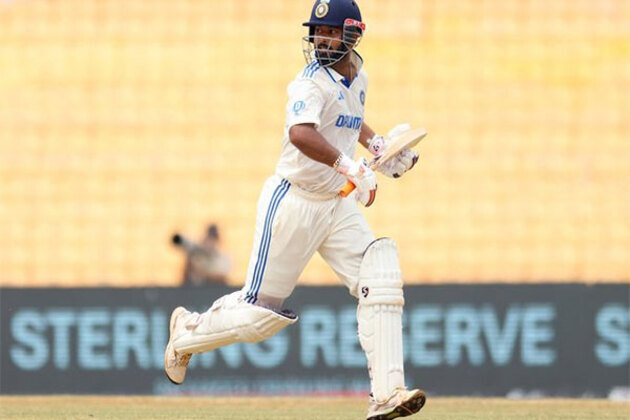
New Chandigarh (Punjab) [India], June 7 (ANI): India lost three wickets in the first session of Day 2 of the one-off Test match against...
Confidence in U.S. security commitments among Gulf and Arab states has been significantly eroded as Washington's approach is increasingly...
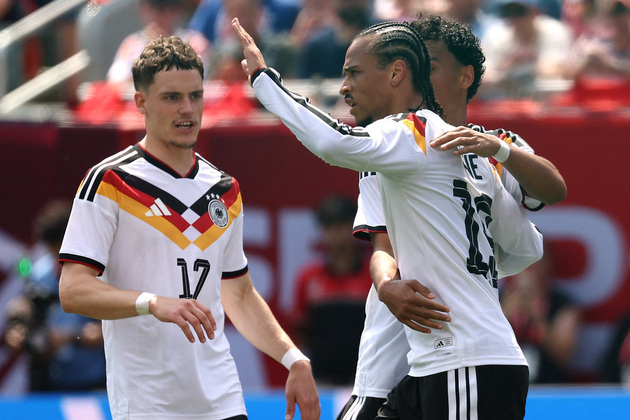
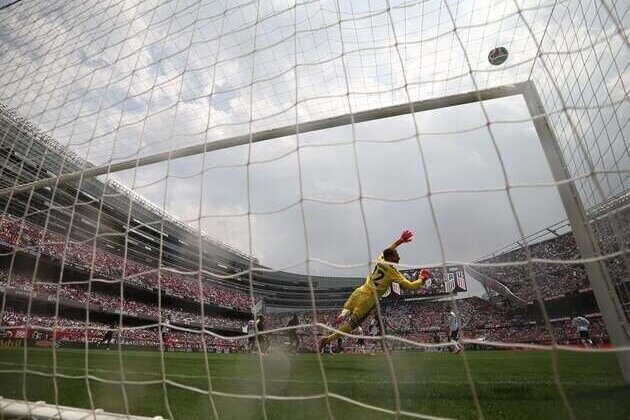
Chicago [US], June 7 (ANI): Germany continued their fine form heading into the FIFA World Cup, beating co-hosts 2-1 in the friendly...
Cleveland (Ohio) [US], June 7 (ANI): Brazil continued their preparations for the 2026 FIFA World Cup in impressive fashion, securing...
(Photo credit: Talia Sprague-Imagn Images) The day began with Jim Cornelison, the famed Chicago Blackhawks signer, doing his usual...
Ahmedabad (Gujarat) [India], June 6 (ANI): Argentinian Nabila Sol Barraza comes from the same village as the legendary footballer Lionel...
Kolkata (West Bengal) [India], June 6 (ANI): Former Indian Army Chief General Manoj Mukund Naravane (Retd) has stressed the importance...
(Photo credit: Daniel Jefferson-Imagn Images) Paraguay star Julio Enciso was stretchered off the field in tears on Friday, just one...